A plastic package can either reach the end of its life or become the starting point for a new production process.
What makes the difference is proper collection, material separation, and the quality of the recovery processes.
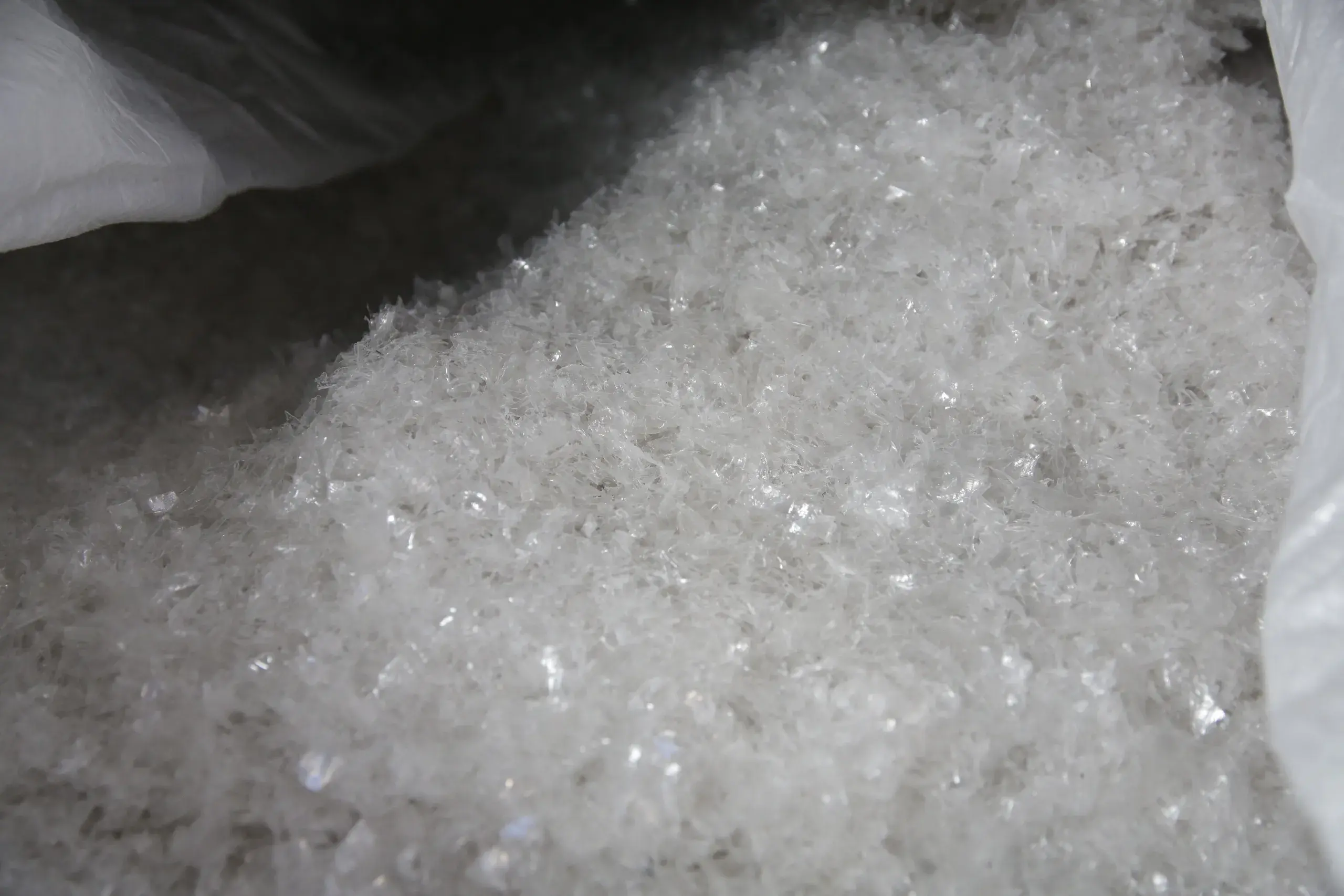
In mechanical recycling, grinding reduces plastic waste into fragments of controlled size, commonly known as regrind or flakes. The material can then undergo subsequent stages of cleaning, separation, extrusion, and transformation.
However, simply shredding plastic is not enough to obtain a usable raw material. The quality of the result depends on the purity of the input material, the correct distinction between different polymers, and the ability to remove contaminants and foreign components.
What is meant by regrind plastic
Regrind plastic is obtained by reducing the size of industrial waste or previously collected and sorted post-consumer materials.
The result is a material composed of relatively homogeneous fragments, categorized based on characteristics such as:
PET, PP, PE, PVC, and PS have different properties and cannot be treated as a single, indistinct material.
To obtain consistent and technically usable regrind, each stream must be processed separately. The company Starplastick, used as a reference for the process, describes a sequence consisting of sorting, iron removal, aspiration, and grinding, with a final classification of materials by polymer and color.
The main stages of the process
The path may vary depending on the type of waste and the facility used, but mechanical recycling generally includes a few fundamental stages.
1. Collection and sorting
Waste is analyzed and separated by plastic type, size, and, when necessary, color.
This step is essential because different polymers can have incompatible processing temperatures and behaviors. COREPLA emphasizes that post-consumer packaging is sorted into homogeneous streams before being sent for recycling.
2. Removal of foreign materials
Before grinding, metals, non-plastic elements, impurities, and components that could contaminate the material or damage equipment must be removed.
Magnetic systems, suction, optical detectors, and manual checks can be used.
3. Grinding
The material is fed into specialized mills or granulators and reduced into fragments.
In addition to reducing size, grinding helps detach elements such as labels, sealing films, and other components applied to the packaging from the main body.
4. Washing and separation
The fragments are cleaned to remove dirt, residues, glues, and other unwanted substances.
Depending on the material, flotation separation systems may be used, where the different densities of the polymers allow them to be separated. COREPLA identifies grinding, washing, and the removal of unwanted fractions as core operations of mechanical recycling.
5. Drying and transformation
Once washed and dried, the ground material can be used directly in certain processes or subjected to extrusion to obtain more uniform granules.
The recovered material thus becomes a secondary raw material, ready to re-enter the production cycle when its characteristics and technical requirements allow.
Why PET requires special attention
PET is valued in packaging for its transparency, rigidity, lightweight nature, and recyclability.
During recovery, however, the purity of the stream is crucial. PETCORE Europe highlights that even very small amounts of other materials, particularly PVC, can compromise the quality of PET during subsequent processing stages.
For this reason, not all flakes can be considered equivalent.
Their quality depends on the origin of the material, the accuracy of the sorting, the degree of contamination, the consistency of the grinding, and the checks performed during the process.
Industrial waste and post-consumer material
Industrial waste generally comes from controlled production processes. It is often more homogeneous and has a known composition because it originates from a specific manufacturing process or a single material.
Post-consumer waste, on the other hand, has already completed its usage cycle. It may contain labels, adhesives, residues, and contaminants that require more complex sorting and cleaning.
Both can become resources, but they require processes suited to their origin and intended future use.
Recyclability starts with design
The quality of recycling does not depend solely on what happens at the end of a product's life.
It also depends on the decisions made when the packaging is designed.
Limiting the use of incompatible materials, simplifying the separation of components, choosing labels and closure systems correctly, and reducing unnecessary elements can make subsequent recovery more effective.
Designing with the life cycle in mind therefore means simultaneously considering protection, communication, production, and recyclability.
Valmont analyzes materials, geometries, and production requirements to develop solutions that are scalable and consistent with their intended use. Because effective packaging must protect the product during its use, but also be consciously designed for what happens afterward.